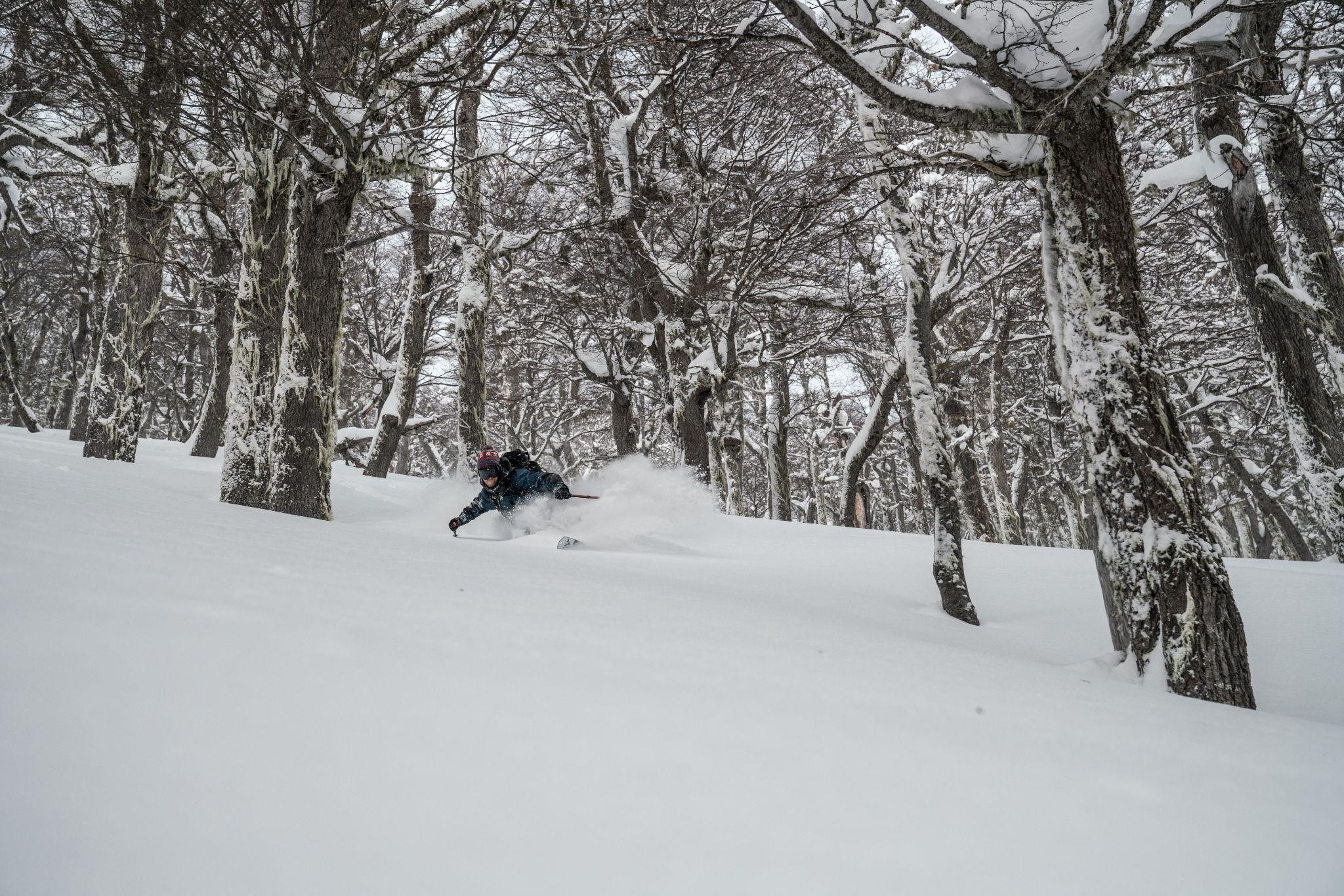
El Niño Is Coming.
Here's What That Means
for the Andes in 2026.
Something is shifting in the Pacific Ocean right now — and by July, it could be responsible for some of the deepest powder the Andes has seen in years. Here's the honest, data-backed breakdown.
The Andes don't care about marketing calendars. They respond to the Pacific Ocean — to a vast, slow-moving system of warm and cold water that shifts every few years and reshapes the entire southern hemisphere's weather. Right now, that system is in the middle of one of its most significant reversals in years. La Niña is collapsing. El Niño is on its way. And the timing, for once, lines up almost perfectly with the South American ski season.
This isn't hype. It's data — from NOAA, ECMWF, and 25+ years of watching these mountains respond to the Pacific. We'll break it down honestly, zone by zone, so you can plan with real information instead of vague optimism.
01 — The Science
The Two-Minute Ocean Lesson Every Skier Should Know
Every few years, the equatorial Pacific Ocean oscillates between two opposite states. You've heard the names. Here's what they actually mean for your ski trip:
La Niña — Cold Phase
Colder Pacific Waters
Trade winds strengthen. Cold water upwells near South America. Storm systems weaken and stall over the ocean. For the Andes: drier winters, lighter snowpack. Still skiable — but not historically epic.
El Niño — Warm Phase
Warmer Pacific Waters
Trade winds weaken. Warm water spreads east. The atmosphere loads with extra moisture and storms push deep into the continent. For the Andes: heavier, more frequent snowfall through the winter. The legendary seasons happen here.
The critical thing to understand is what El Niño does specifically to the Andes — not to Colorado, not to the Alps. The Andes sit on the western edge of the continent, facing the Pacific directly. When El Niño loads the Pacific with warm, moisture-heavy air, those systems hit the Andean wall first. The dry desert air of the altiplano strips the storms of temperature but preserves the moisture — creating the light, cold, high-SLR powder that makes Andes skiing feel unlike anywhere else on earth.
"In 1997–98, during a strong El Niño, Portillo received 157 inches of snow in just five days during a single storm. Five days."
02 — Current Status
Where We Are Right Now — March 2026
The 2025–2026 Northern Hemisphere winter saw a weak La Niña — the third consecutive La Niña year, which is already unusual. Ocean temperatures in the equatorial Pacific ran below average through December and January. But since late January, something has changed.
The La Niña is collapsing. Fast. Here's what the official forecasts say as of this week:
The European Centre for Medium-Range Weather Forecasts (ECMWF) — Europe's equivalent forecasting authority — takes the Pacific into proper El Niño territory during Summer 2026, with the event potentially strengthening into winter 2026/2027. Historically, ECMWF forecasts in this range have tended to underestimate peak El Niño strength, not overestimate it.
What "neutral" to El Niño actually means for June–October
Even as La Niña fades to neutral in April–May, that transition itself tends to produce active storm patterns in the southern hemisphere. The Andes benefit from neutral ENSO years more than most ski regions — the mountains are high enough and the storm track consistent enough that the baseline is already excellent. What El Niño adds is frequency and depth.
03 — Zone by Zone
What El Niño Does to Each Region — Honestly
El Niño doesn't hit every part of Chile and Argentina the same way. The Andes span 40 degrees of latitude and three distinct climate zones. Here's our honest, unvarnished breakdown:
Central Chile
Santiago Corridor
Strongest signalValle Nevado · La Parva · El Colorado · Portillo
The central Andes is the biggest El Niño beneficiary on the continent. The Pacific storm track shifts directly into the Santiago cordillera. Warmer ocean temperatures push moisture deeper and higher into the range before it loses humidity. The result: more storm events, heavier totals per event, and a snowpack that builds faster and stays deeper longer.
In 1997–98 (strong El Niño), Portillo accumulated over 13 meters in a single season. Valle Nevado in 2023 (moderate El Niño) hit 6.6 meters — one of the deepest packs in 30 years. These resorts are within 2 hours of Santiago. If El Niño arrives on schedule, this is where you want to be in July and August.
Volcanic Zone · Chile
Nevados de Chillán
Consistently deepChillán · Corralco · Antillanca
The volcanic zone sits at the intersection of Pacific storm systems and southern fronts pushing up from Antarctica. It's one of the most consistently deep snowpack destinations in South America regardless of ENSO phase — and in El Niño years, that consistency gets even better.
Chillán in particular benefits from its position in the southern transition zone: it captures both the extra Pacific moisture from El Niño and the cold air masses from the south. Active geothermal terrain means hot springs on-mountain even mid-storm. For guests who want to ski in the morning and soak at 40°C at night — this is that trip.
Northern Patagonia · Argentina
Bariloche Region
ENSO-neutral zoneCerro Catedral · Chapelco · Cerro Bayo
The honest answer on Patagonia: El Niño's direct influence weakens significantly south of 38°S. Bariloche and the Lake District are more influenced by polar fronts pushing up from Antarctica than by ENSO dynamics in the Pacific. This means El Niño years don't guarantee exceptional snow in Bariloche the same way they do in central Chile.
That said — Cerro Catedral is South America's largest ski resort for a reason. The terrain, tree skiing, and backcountry access are unmatched in Argentina. The town of Bariloche at the base is a genuine mountain culture destination. And in strong El Niño years, the central Andes snowpack tends to push south earlier in the season, giving Bariloche a better than average start.
High Desert · Argentina
Las Leñas
Strong when it hitsLas Leñas (Malargüe, Mendoza)
Las Leñas sits on the Argentine eastern slope of the Andes in a high-altitude desert environment (2,240m base, 3,430m peak). It receives snow from a different mechanism than Chilean resorts — eastward-crossing storms that dump moisture on the lee side of the range. In El Niño years, the strengthened storm track across central Argentina means more systems reaching Las Leñas with real intensity.
Think Chamonix if Chamonix were in Argentina with no queues, 3,000 acres of expert terrain, and some of the driest powder in the southern hemisphere. This is the destination for skiers and snowboarders who want steep, long, and consequential. El Niño doesn't guarantee it — but it loads the dice in your favor.
04 — When to Go
The Honest 2026 Ski Calendar
Based on everything above, here's our unfiltered read on the 2026 season window. This isn't a travel agency calendar — it's how we actually plan our own trips.
June
Early Season
Hit or miss. Big El Niño years can open with remarkable early powder. Chilean resorts open first, often by June 13–21. Go early if you like being first and don't mind uncertainty.
July
Winter Hits
Peak snowfall begins. Avoid weeks 2–3 (South American school holidays = crowds at Catedral and Portillo). Early July or wait for August.
August
Peak Season
Deepest snowpack. Steady storm cycles. Empty slopes on weekdays. The Santa Rosa Storm at month's end. Backcountry at its absolute best. If El Niño delivers, August 2026 will be historic.
Sep – Oct
Spring Skiing
Corn snow mornings, bluebird days. Volcano touring season opens in Chile. Uncrowded, stable, a completely different kind of mountain experience.
05 — Local Knowledge
The Santa Rosa Storm — Something Only Locals Know
Every year around August 30th, the Andes receives one of its most consistent and reliable storm cycles of the entire season. Local guides here call it the Santa Rosa Storm, named after the Catholic feast day of Santa Rosa de Lima on August 30th.
Local Knowledge · Annual Pattern
The Santa Rosa Storm — August 30th
This isn't superstition. Meteorologists have tracked this pattern for decades. The week surrounding August 30 is statistically one of the highest-probability windows for significant snowfall in the central Andes. The atmospheric setup — a deep Pacific low connecting to southern frontal systems — tends to lock in around this date almost every year. We build our late-August trips around it. If you're in the mountains that last week of August, you're almost always skiing fresh snow within days of arrival. This is the kind of intel that doesn't appear in any travel blog. You learn it by spending winters here.
06 — The Honest Part
What We Can't Promise — and Why That's Okay
We'd be doing you a disservice if we ended here without saying this plainly: nobody can guarantee a ski season. Not NOAA. Not ECMWF. Not us.
El Niño is a strong signal, not a contract. The 2023–24 El Niño produced some epic isolated storms in the Andes — but also longer dry spells between them than expected. The 1997 and 2015 El Niño years were genuinely historic. Each one plays out differently depending on factors that long-range models can't capture 4 months out.
What we can promise:
The Andes are also high enough (2,500–3,500m at most riding terrain) that even in a neutral or quiet ENSO year, cold, dry powder shows up with regularity. The worst Andes season we've had in the last ten years was still better than an average Utah February. The atmospheric setup for 2026 just makes the upside considerably larger.
"We don't sell seasons. We sell the ability to find the best skiing wherever it is, whatever the conditions. El Niño just makes our job easier."
2026 Season — Now Booking
August spots
are filling fast.
Tell us your dates and what kind of skiing you're after.
We'll build the right trip around you — and the snow.