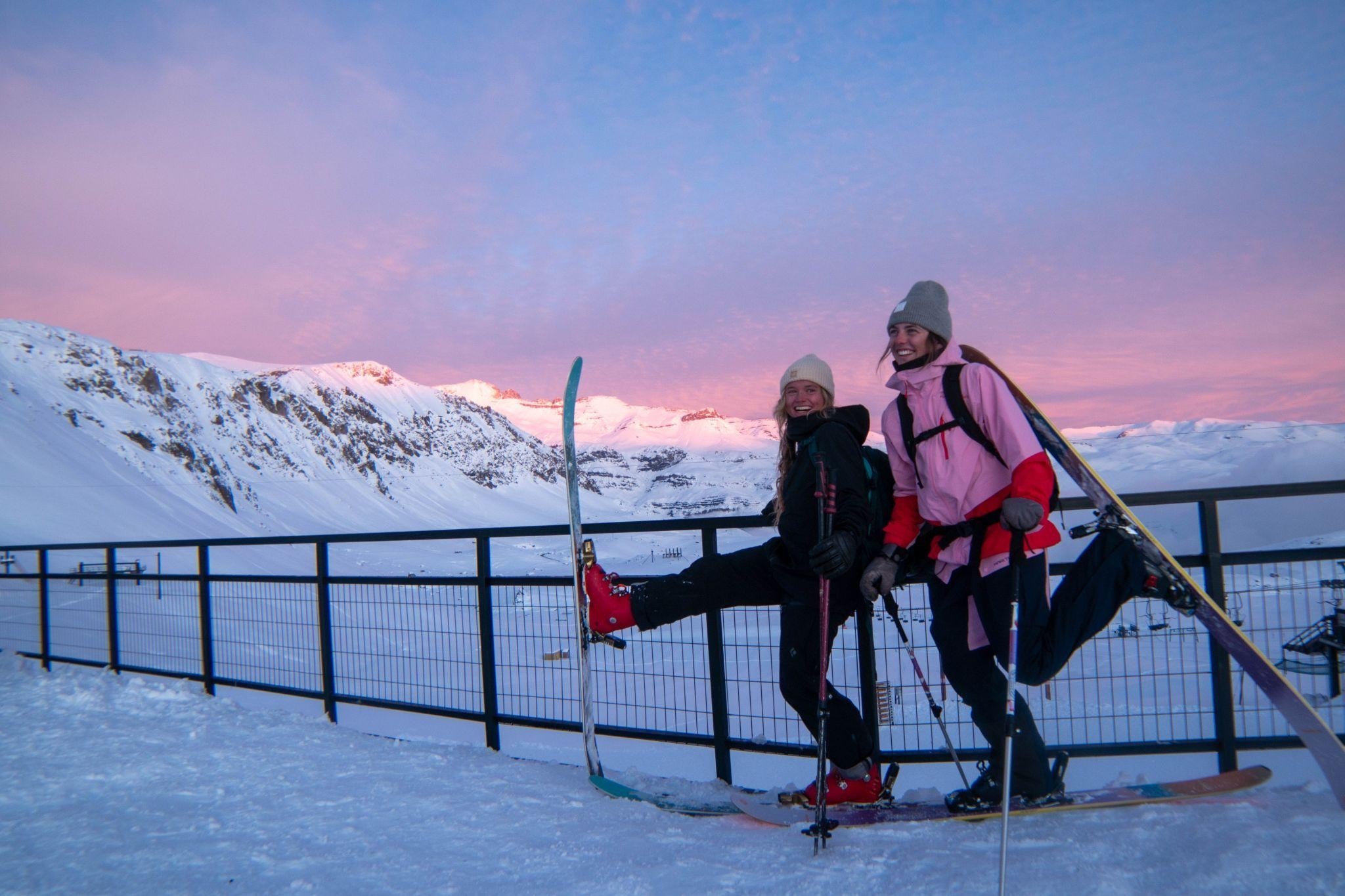
Skiing the Andes:
The Complete Guide
Season dates, best destinations, skill levels, gear checklist, and why a certified local guide changes everything about skiing in South America.
The Andes are one of skiing's best-kept secrets. While Europe and North America dominate the headlines, Chile and Argentina offer world-class powder, uncrowded mountains, and a mountain culture unlike anywhere else — and they do it when the northern hemisphere is deep in summer. This guide answers every question we get before each season.
01 — When to Go
When Is Ski Season in Chile & Argentina?
The southern hemisphere winter runs from June through October, with peak snowfall between July and September. That means you can chase powder in the middle of your northern summer — a significant advantage if you've already exhausted your winter ski budget back home.
Jun – Jul
Season Opens
Chilean resorts open first. Early-season conditions, fewer crowds, good value.
Aug – Sep
Peak Season
Best powder, consolidated snowpack, ideal for backcountry and freeride.
Oct
Spring Skiing
Corn snow, stable weather, uncrowded. Best window for volcano ski mountaineering.
Chile vs. Argentina: timing differences
Chilean resorts typically open first — sometimes as early as June — because the Pacific-facing slopes receive storm systems before they cross the Andes. Argentine resorts open a few weeks later but often deliver drier, lighter snow during peak season.
Best window for backcountry
For off-piste touring, August and September are ideal: the snowpack is well consolidated and weather windows are more reliable. Spring (October) unlocks a special season on Chile's southern volcanoes — stable conditions, stunning views, and ski lines impossible to find anywhere else on earth.
02 — Where to Go
Best Ski Destinations in the Andes
The Andes offer three distinct zones, each with its own character. Esnativa operates across all of them so we can always chase the best conditions — wherever they happen to be.
Central Chile
Santiago & Farellones
Valle Nevado, La Parva, and El Colorado — all within 2 hours of the capital. High altitude, reliable snow, easy access.
Volcanic Zone
Nevados de Chillán
Active volcanoes, natural hot springs, and jaw-dropping backcountry terrain unlike anywhere in the Alps.
Northern Patagonia · Argentina
Bariloche — Cerro Catedral
South America's largest ski resort. Old-growth forests, world-class freeride, and the iconic Patagonian town of Bariloche.
Southern Chile
Corralco & Antillanca
Uncrowded runs through native araucaria forest. Conical volcanoes as backdrops and consistently good snow.
03 — Type of Skiing
Backcountry vs. Resort Skiing in the Andes
A ski resort offers lifts, groomed runs, and full mountain services — perfect for families and beginners. Backcountry skiing takes you beyond the resort boundary into untracked terrain: untouched powder, total silence, and views that aren't shared with hundreds of other skiers.
In the Andes, true backcountry begins just minutes from the lifts and can take you into couloirs, glaciers, and volcanic summits that simply don't exist at this scale in the Alps or Rockies.
"The best powder in the Andes isn't in the resort. It's five minutes past the last lift — if you know where to look."
What backcountry requires: avalanche safety gear (beacon, shovel, probe), solid fitness, and a certified guide who knows this specific terrain. Many of our guests combine both: resort days when conditions call for it, and touring objectives when the snowpack and weather align.
04 — Skill Level
What Ski Level Do I Need?
Esnativa designs programs for all abilities — from skiers comfortable on intermediate runs to advanced freeriders hunting steep technical lines. There is no single entry bar; the program is built around you.
Minimum for guided backcountry
We recommend being able to link parallel turns on blue/red runs without effort. Our guides read the group and adapt terrain accordingly — fitness and attitude matter as much as raw technique.
What if I'm a beginner or intermediate?
The central resorts near Santiago and Bariloche have excellent ski schools. We build itineraries that combine resort lessons with easier touring days, so you progress naturally across the trip without ever being out of your depth.
05 — What to Pack
Gear: What You Need and What You Can Rent
You don't need to travel with a full kit. Here's what actually matters — everything else is available to rent on the ground:
- Technical layering — moisture-wicking base, insulating mid-layer, waterproof shell jacket and pants
- Waterproof gloves and a helmet — strongly recommended over a hat for impact protection
- Ski goggles — non-negotiable for storm days and high-altitude UV exposure at 2,500–3,500m
- Your own ski boots if you have them — rental boots rarely fit as well and affect performance noticeably
- High-SPF sunscreen — altitude amplifies UV significantly; reapply every 2 hours on snow days
- Backcountry: beacon, shovel & probe — required for off-piste terrain; available to rent with advance notice
Skis, bindings, touring setups, and all avalanche equipment are available to rent at each destination. We coordinate all rentals as part of the trip logistics — just let us know what you need when you book.
06 — Why a Local Guide
Why a Certified Local Guide Changes Everything
The Andes are not the Alps. The mountains here are more remote, rescue response times are longer, and the weather can shift dramatically without warning. A guide isn't a luxury — it's the difference between an extraordinary experience and a genuinely dangerous situation.
Every Esnativa guide is AMGA-, IFMGA-, or ACGM-certified with years of experience specifically in these mountains. They know where the powder is when the resort is hard, and they understand Andean avalanche patterns that behave differently from European conditions.
"Local knowledge can't be improvised. Our guides have spent years living these mountains — not just guiding on them."
Beyond safety, we handle all logistics: airport transfers, accommodation, meals, and permits. Your only job is to ski.
07 — FAQ
Frequently Asked Questions
When is the best time to ski in Chile and Argentina?
The ski season runs from June through October. July and August offer the most consistent snowfall and best powder conditions — this is peak season. September brings longer days and excellent spring corn snow, ideal for ski touring. October is late season with fewer crowds and stable snowpack perfect for volcano ski mountaineering.
What are the best ski resorts in the Andes?
Top Andes ski resorts include Valle Nevado, La Parva and El Colorado near Santiago; Nevados de Chillán in the volcanic zone of Chile; Cerro Catedral near Bariloche (South America's largest ski resort); and Corralco and Antillanca in southern Chile. Each offers a distinct character and terrain profile.
Is backcountry skiing in the Andes safe?
With the right guides and gear, yes. All Esnativa guides are certified avalanche specialists. We never leave the resort boundary without assessing the daily avalanche bulletin and current snowpack conditions. Andean avalanche patterns differ from European conditions — another reason local expertise is non-negotiable.
What skill level do I need for a guided ski trip in the Andes?
Esnativa runs programs for all levels. For backcountry, we recommend being able to link parallel turns on blue/red runs comfortably. Beginners and intermediates are welcome on resort-focused programs, which can include ski school lessons and progressively more challenging terrain across the trip.
How far in advance should I book?
For multi-day programs we recommend booking 8–12 weeks ahead, especially for July and August which fill earliest. A 50% deposit is required at booking, with the balance due 5 weeks before departure.
What happens if snow conditions are poor?
We move. If one destination isn't delivering, Esnativa has the flexibility to chase good snow — sometimes to another zone, sometimes to another country. Our goal is to get you skiing well, not to follow a fixed map on paper. Operating in both Chile and Argentina gives us more options than almost any other operator in South America.
Do you guide snowboarders as well as skiers?
Yes. Esnativa guides both skiers and snowboarders in resort and in the backcountry (splitboard). The only requirement is that your level matches the terrain for your chosen program.
Do I need travel insurance for skiing in the Andes?
Yes — we strongly recommend it. Ensure your policy covers helicopter evacuation and mountain rescue, and verify that backcountry skiing is specifically included before you travel. Many standard travel policies exclude off-piste skiing by default.
How do I get to the ski destinations from Santiago?
Central zone resorts (Valle Nevado, La Parva) are under 2 hours from Santiago by road. Nevados de Chillán has flights to Concepción with a 1.5-hour transfer. Bariloche (Cerro Catedral) has direct flights from Buenos Aires and Santiago. We coordinate all transfers as part of the trip.
Can you accommodate large groups or families?
Absolutely. We design programs for groups of all sizes and for families with children who already ski. As a boutique operation, every experience is personal and paced around the group — not around a pre-set schedule.
Ready to Go
Plan Your Andes
Ski Adventure
Tell us your dates and skill level.
We'll build the right trip around you.