Chasing Winter South
From nearly empty lift lines and warm improvised hospitality to world-class guided access into the high Andes — an evolving love affair with skiing the Southern Hemisphere.
My first trip to ski Chile and Argentina in 2013 started with a simple idea: if winter ends at home, why not follow it? I arrived with an overstuffed ski bag, a bag of peanuts that got confiscated, and the sort of naïve confidence you only get when you've never tried to navigate a mountain town in a different hemisphere. What I found was bigger than a second season of turns. It was a culture of welcome that filled in every gap — language, logistics — while the Andes provided the kind of dramatic skyline that makes you stop mid-run just to stare.
I've been back enough times now that the memories come in two distinct chapters: the early years, when there were few Americans, little to no backcountry touring, and a wonderful sense that everyone — shop owners, lifties, hotel owners — was rooting for you to have the best day imaginable; and the more recent years, when infrastructure and service have climbed to a new level, and guided access has opened the door to full backcountry objectives that once felt out of reach. Both versions of this experience are worth telling, because together they show how a ski culture can grow without losing its soul.

2013
First Chapter
Quiet mountains, few Americans, in-bounds skiing, and a warmth that turned strangers into teammates.
2026
Second Chapter
World-class infrastructure, professional guides, and real backcountry objectives that once felt out of reach.
Quiet Mountains
Big Welcome, Empty Lift Lines
Back then, skiing the Andes felt like being let in on a secret. On many mornings the base area was so calm you could hear boots crunching on frozen gravel and the low clank of chairs rolling through the terminal. The vibe wasn't sleepy — more like unhurried confidence. People knew what they had, and they didn't need a hype machine to prove it. You'd ride the lift with locals who had grown up watching storms stack against the ridgelines, and they'd point out peaks the way someone might point out neighbors: "That one holds snow," "That one is wind-scoured," "Over there is where we go in spring." It was less a destination resort and more a community that happened to have chairlifts.
What struck me most was how few Americans I ran into. In North America I was used to hearing familiar accents in the lift line, talking gear, comparing snowfall totals, complaining about crowds. In Chile and Argentina during those early trips, I was often the outlier — and that was a gift. It nudged me to listen more, to read the rhythm of how people moved through a day on the mountain. Conversations weren't rushed. Someone would ask where you were from, then follow it with the kind of practical kindness that turns strangers into teammates: which bakery had the best empanadas, or who to call if you needed a find a ride back to town.
The real magic happened off the snow. The South Americans I met were generous in a way that felt both effortless and deeply intentional.
— James Watson Jr.In those days, the skiing itself was decidedly "in-bounds." Not because the terrain outside wasn't tempting — it was everywhere, rising beyond the ropes in clean volcanic and alpine lines — but because the touring culture I took for granted at home just wasn't as visible. There were fewer shops renting modern touring setups, fewer beacon checks, fewer casual references to snowpack tests. The idea of wandering out with skins and a plan felt less like a standard Saturday and more like a specialized expedition. So I skied lifts hard, learned the snow, and let the mountains show me their character run by run.
Storms in the Andes arrive with a different kind of drama — clouds boiling over ridges, wind shaking the lift towers, the sky going the color of pewter. When it cleared, the light hit the peaks like a spotlight.
The real magic, though, happened off the snow. The South Americans I met were generous in a way that felt both effortless and deeply intentional. Lodging hosts didn't just hand over keys; they explained how the town worked, and which days the mountain might close because "the wind up high has its own opinions." Meals turned into invitations. One "quick drink" turned into a late-night table of way too many drinks and laughter that didn't need perfect translation. I came for the skiing, but I returned because I missed those moments.
Portillo — A Constant Through the Years
My favorite place to visit 10+ years ago and still today. The resort has everything you could want from a destination ski mountain — beautiful scenery, great skiing, and unbelievable white-glove service. I've made many friends at Portillo, and am sure I'll meet more on my next visit.
Word Got Out
And the Andes Leaned In
Over time, the secret got harder to keep. Photos traveled faster. Flights became easier to stitch together. Skiers who once treated the Southern Hemisphere as an exotic "maybe someday" started building annual pilgrimages into their calendars. With that attention came investment: upgraded base areas, smoother logistics, better dining, and a level of service that met — and sometimes surpassed — what I'd come to expect at major resorts elsewhere. The mountains didn't change, of course — but the way we moved through them did.
On my later visits, I heard more English in the lift line and spotted more familiar brands in ski shops. Part of me missed the earlier quiet, when you could go a full day without meeting someone from your own continent. But another part of me admired how well many places managed the growth. The friendliness didn't disappear; it simply expanded to include a broader crowd. The best kind of hospitality isn't exclusive — it's scalable, and in the Andes it often felt like the mountains were teaching that lesson too.
Planning your first trip to the Andes?We've been guiding skiers here since day one. Happy to answer any questions.
Talk to UsElevated Service, Real Backcountry
Better Infrastructure — Same Heart
The first thing I notice now is how frictionless the experience can be. Transportation feels clearer and more dependable. Lodging options cover the whole spectrum, and many have dialed-in routines for ski days.
What surprised me is that "great service" in Chile and Argentina doesn't always look like the polished script you might find elsewhere. It's still personal. Someone remembers your name — not because it's in a system, but because it's hard to pronounce in Spanish (mine is "Watty"). A guide takes an extra moment to draw a line in the snow with a pole, explaining how the terrain funnels wind and where the soft pockets tend to survive. A driver loads your skis with the care of someone who actually skis. The infrastructure has improved, but the heart of it remains distinctly South American: warm, proud, and unafraid to be human.
A guided day begins with a clear plan and a willingness to change it. The quiet competence of checking equipment, watching clouds build, feeling the wind on the ridge — then come the choices that distinguish locals from visitors.

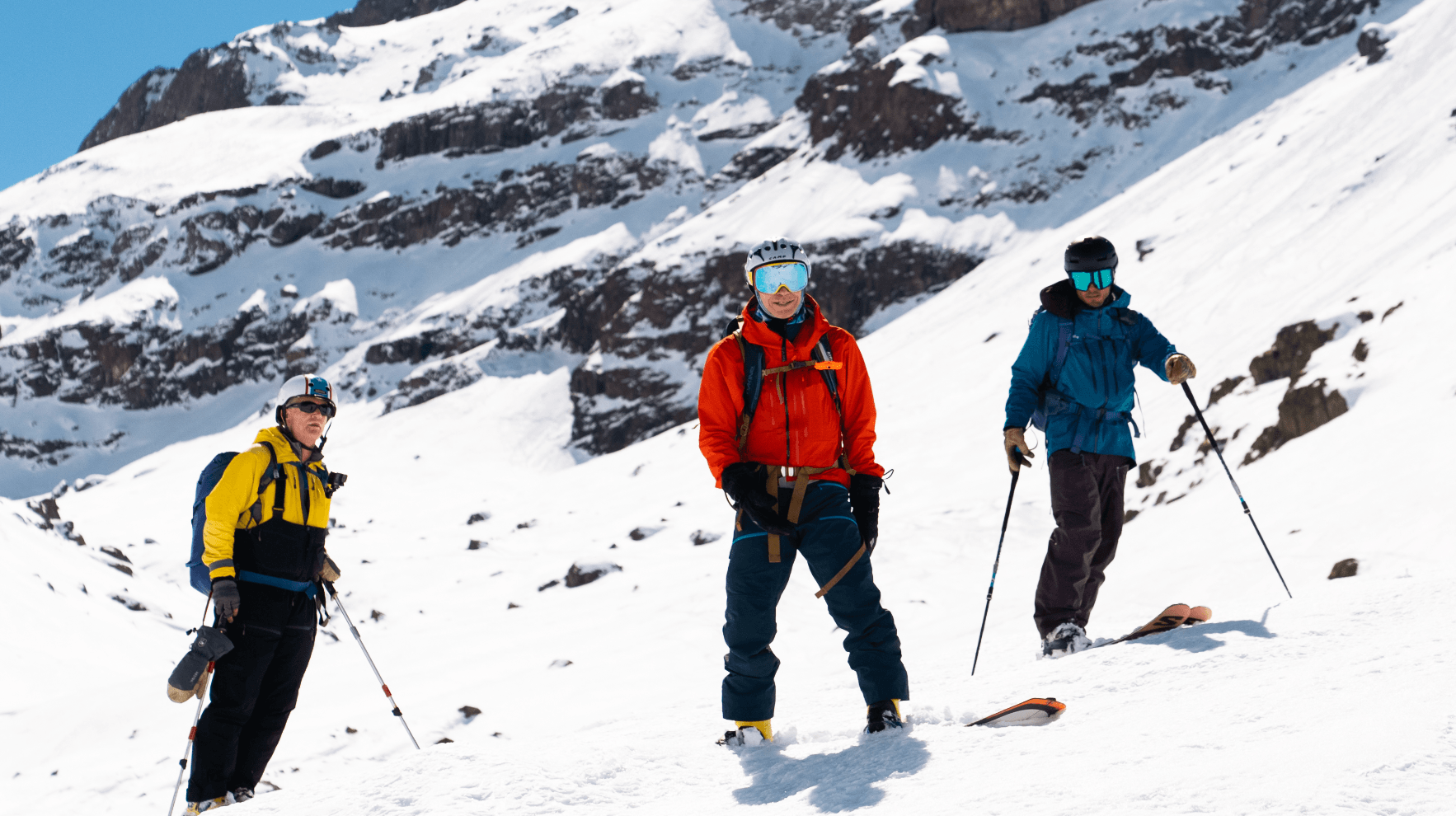
The biggest evolution, for me, has been backcountry access. Where earlier trips were mostly lift-served explorations, recent years have opened into a fuller menu of possibilities — especially with professional guides who know the terrain, the weather patterns, and the local decision-making that keeps things safe. With that support, the Andes feel less like an impressive backdrop and more like an invitation. You start thinking beyond "What runs are open?" and into "What does the mountain want to give us today?"
It helps that the ecosystem around touring has matured. More shops carry the right equipment. More people talk openly about conditions. It's easier to find professional guidance, and easier to meet other skiers who share the same respect for the mountains. That shift doesn't mean the backcountry is "easy" or casual — far from it — but it does mean that the doorway is more clearly marked, and the resources for doing it responsibly are far more accessible than they used to be.
The Andes reward patience and humility. The prize isn't just fresh tracks — it's the confidence that you earned them thoughtfully.
— James Watson Jr.Of course, progress brings tradeoffs. There are more people chasing the same storm cycles, and the most obvious zones can feel busier than they once did. Yet the Andes are vast, and the combination of improved access and expanded knowledge has allowed me to ski more of them, not less. In a way, the newer infrastructure has made it easier to reach the older magic — the quiet bowl, the long ridge, the midweek day when the weather breaks and the whole range seems to glow.
And Why I Keep Going Back
The Lesson the Andes Taught Me
If there's a single lesson these trips have taught me, it's that skiing is never only about skiing. The early years gave me the kind of travel humility that turns a destination into a relationship. When you're one of the only outsiders, you stop expecting the mountain to work like home. You adapt. You ask questions. You accept help. You learn that a "perfect day" might include a delayed opening, a long lunch, and a conversation that changes how you see the place.
I also learned that warmth is a form of expertise. The welcoming spirit I encountered in Chile and Argentina wasn't just politeness — it was a way of taking care of the community that comes with living near big mountains. Showing up with curiosity matters. Even now, when the resorts feel more polished and guest services smoother, the trip is still at its best when I slow down enough to meet the place where it is.
5 things I wish I'd known from the start
-
Build in flexibility. Weather in the Andes can be dramatic, and some of the best days arrive right after you've adjusted your plans.
-
Lean into the local pace. A long lunch, a late start, or a lingering conversation can be part of the point — not a detour from it.
-
Pack curiosity along with your layers. A few phrases of Spanish, an open mind, and a willingness to ask for recommendations go a long way.
-
Consider professional guidance for off-piste ambitions. Local guides can unlock terrain and context while helping you make smart, respectful choices.
-
Remember you're chasing winter — but also a perspective. The Andes have a way of resetting what "a good ski trip" means.
When I think back on those first visits — quiet lift lines, improvised solutions, and strangers who treated me like a friend — I feel a kind of gratitude that's hard to summarize. And when I ski there now — benefiting from better infrastructure, remarkable service, and the chance to step beyond the ropes with skilled guides — I feel an equally strong appreciation for how places evolve. The Andes have given me two versions of the same gift: access to winter when I thought it was over, and access to people who make the world feel larger and kinder.
I keep going back because each trip, in its own way, delivers the same moment: standing on a high ridge, looking across a range that seems to run forever, and realizing that the best turns are the ones that carry a story with them.
Your Story Starts Here
Ready to Chase
Winter South?
Tell us your dates and your level.
We'll build the trip around you.