Short Answer
Yes, you can ski in Patagonia, and it is one of the most scenic places to ski anywhere. Most of the lift-served skiing is in Patagonia Argentina: Cerro Catedral in Bariloche is the main hub, with Cerro Bayo, Chapelco, La Hoya and Cerro Castor further along the Andes. The season runs from June to September or October, and July and August are the most reliable months. Fly into Buenos Aires, connect to Bariloche, and you can be skiing lakes-and-volcano views the next day.
Most people picture Patagonia in summer: granite towers, glaciers and long trekking days. In winter the same mountains fill with snow, and the northern end of Patagonia, around Bariloche and the lakes, becomes South America's best-known ski region outside central Chile. The skiing is different from the high, dry Andes near Santiago. The resorts sit lower, the snow comes off the Pacific, and you ski above deep-blue lakes and forests rather than bare rock. This guide covers where to ski, when to go and how to put a trip together.
Part 01
Can you ski in Patagonia?
Yes. Patagonia covers the southern end of both Argentina and Chile, and the two sides offer very different skiing:
- Patagonia Argentina has the resorts: real lift networks, ski towns, rentals and ski schools, from Bariloche in the north to Ushuaia at the tip of the continent.
- Chilean Patagonia has only a few small local ski areas. Its draw is backcountry: big, empty terrain you reach on skins.
For a first trip, almost everyone starts in Bariloche. It has the biggest resort, the most flights and the easiest access to backcountry.
Part 02
The resorts at a glance
| Resort | Base town | Lifts | Usual season | Known for |
|---|---|---|---|---|
| Cerro Catedral | Bariloche (19 km) | 27 | June – October | The biggest lift network, lake views, sidecountry toward Refugio Frey |
| Cerro Bayo | Villa La Angostura (6 km) | 11 | June – September | Small and quiet, gondola to the top, views over Lake Nahuel Huapi |
| Chapelco | San Martín de los Andes (19 km) | 13 | June – September | Tree skiing, with about 70% of the mountain forested |
| La Hoya | Esquel (12 km) | 8 | July – October | Natural snow only, few crowds |
| Cerro Castor | Ushuaia (26 km) | 14 | June – October | Skiing at the southern tip of the continent |
Lift counts and seasons are from Argentina's national tourism board. Opening and closing dates depend on snow every year.
Part 03
Bariloche and Cerro Catedral
Bariloche is the base for most Patagonia ski trips. It is a real town on the shore of Lake Nahuel Huapi, with restaurants, breweries and chocolate shops, and Cerro Catedral is about 20 minutes away.
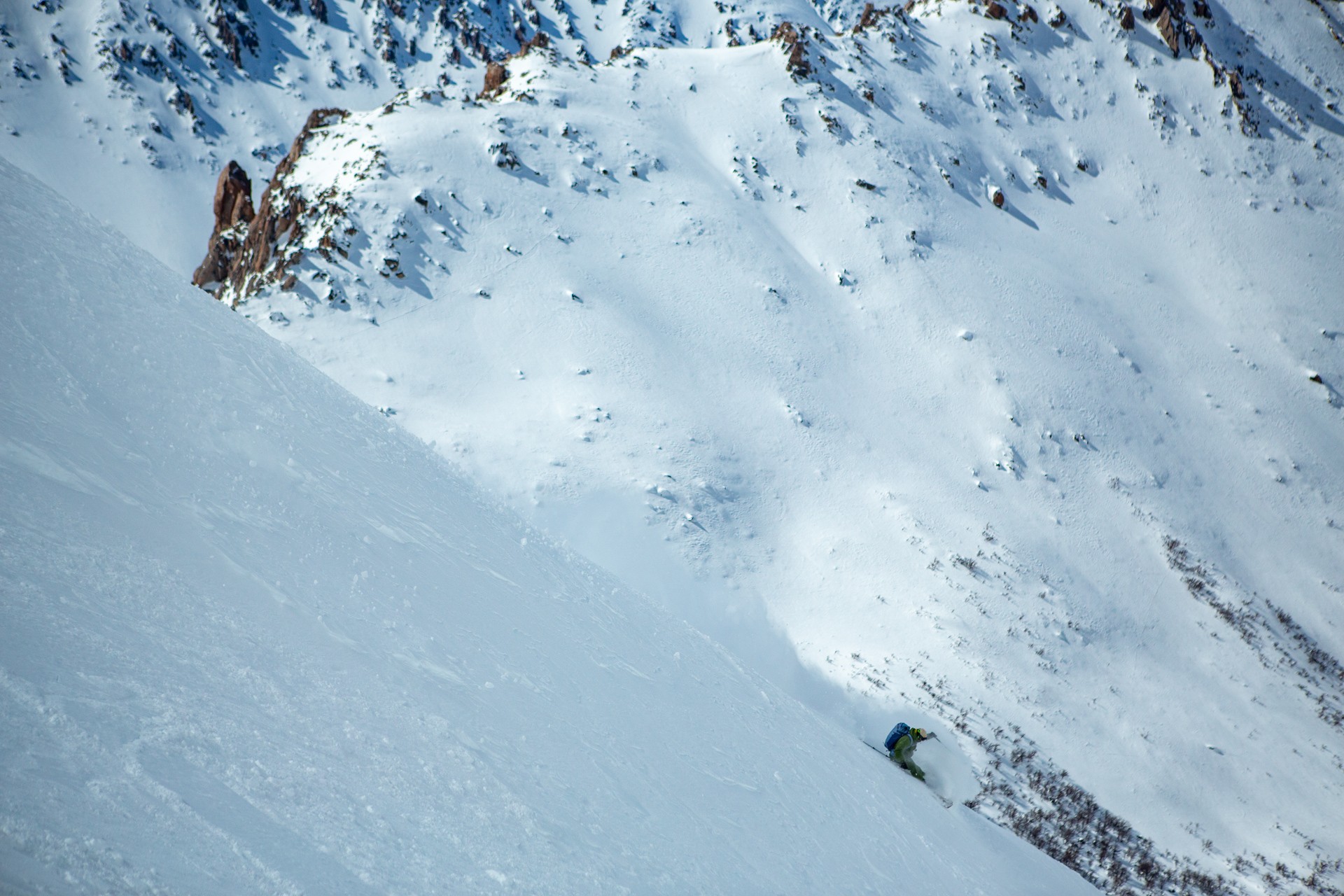
Catedral is the largest resort in Patagonia, with 27 lifts spread across a long ridge. Groomers and ski schools cover beginners and families, while the upper mountain has open bowls and steeper lines for strong skiers. The real prize is what sits behind it: from the top lifts you can skin toward Refugio Frey, a mountain hut surrounded by granite spires and couloirs. It is one of the classic backcountry zones in South America.
If you are choosing between Catedral and the smaller resorts, our Cerro Catedral vs Chapelco vs Cerro Bayo comparison goes deeper.
Part 04
Cerro Bayo and Chapelco
North of Bariloche, the Seven Lakes road links two quieter resorts that pair well with Catedral on a road trip:
- Cerro Bayo, just above Villa La Angostura, is small, uncrowded and has some of the best lake views in the Andes. It is a good place for relaxed days and for families.
- Chapelco, near San Martín de los Andes, is mostly forested. When storms roll in and the upper mountains lose visibility, the trees keep the skiing good.
Moving between the three towns lets you follow the snow and the weather, which is how our Patagonia resort tour works.
Part 05
Further south: La Hoya and Cerro Castor
La Hoya, near Esquel, is a local favorite with natural snow only and few visitors. It works as a stop on a longer road trip rather than a destination of its own.
Cerro Castor, outside Ushuaia in Tierra del Fuego, is skiing at the end of the continent. The novelty is real, and so is the distance: it is a separate flight from the Bariloche area, so most visitors ski it as a trip in its own right.
Part 06
Skiing in Chilean Patagonia
Chilean Patagonia has very little lift-served skiing. Near Coyhaique, El Fraile is a small local area with surface lifts and runs through the trees, about an hour's drive from town. Great for locals, but not a reason to fly in.
The reason to ski Chilean Patagonia is the backcountry. Areas such as Cerro Castillo offer huge, empty terrain with no lifts, no crowds and very little infrastructure. It is serious skiing that needs good weather windows, local knowledge and a guide.
If you want lifts in Chile, the big resorts are near Santiago: Valle Nevado, La Parva, El Colorado and Portillo. See our comparison of the Santiago resorts.
Part 07
Backcountry, huts and cat skiing
Patagonia's resorts are only part of the story. Some of the best days are just outside them:
- Hut trips: Refugio Frey and Refugio Jakob, above Bariloche, let you spend nights in the mountains and ski couloirs and bowls right from the door.
- Sidecountry: on storm days, short tours from the top of Catedral reach untracked snow with the lifts close by.
- Cat skiing: a snowcat does the climbing, so you get backcountry runs without long skins.
Outside the resorts there is no patrol and no avalanche control, so go with a local guide. Not sure if you are ready? Read What Level Do You Need for Backcountry Skiing in the Andes?
Part 08
When to go
The Patagonia ski season follows the southern winter. Resorts usually open in June and close between September and October.
- July and August: mid-winter, with the most consistent snow and the best odds for powder. Argentina's winter school holidays fall in July, so resorts are busiest then.
- September: longer days, fewer people and spring snow. A great month for hut trips and touring.
Patagonia gets more wind and wetter storms than central Chile. Plan a full week rather than a couple of days, so you can wait out a storm and ski the clear day after. For a side-by-side with Chile, see When to Ski Chile vs Argentina.
Part 09
Getting there
From the US, the usual route is an overnight flight to Buenos Aires, then a domestic flight to Bariloche (BRC), the main ski hub. San Martín de los Andes (Chapelco airport), Esquel and Ushuaia also have domestic flights in winter.
Many skiers combine Patagonia with central Chile in one trip. For routes, connections and timing, see Getting to Ski in Chile and Argentina from the US.
Part 10
How to ski Patagonia with us
Our Patagonia team is based in Bariloche, and these are the trips we run there:
- Argentina Patagonia Ski Resorts Tour: a week across Cerro Catedral, Cerro Bayo and Chapelco, staying in Bariloche, Villa La Angostura and San Martín de los Andes. From USD 4,450.
- Bariloche Cerro Catedral & Refugio Frey Ski Tour: resort days at Catedral plus nights at Refugio Frey. From USD 3,900.
- Bariloche Hut to Hut Ski Traverse: a backcountry traverse between Refugio Frey and Refugio Jakob. From USD 2,950.
- Bariloche Freeride Progression Camp and the Women's Freeride Camp: a week of coaching to ski steeper, off-piste terrain with confidence.
- Cat Skiing in Patagonia: backcountry runs with a snowcat doing the climbing.
- Bariloche Ski Guide, single day: a private day at Catedral or in the backcountry, if you are already in town.
Want to combine Patagonia with the resorts near Santiago? We build tailor-made trips across both countries.
FAQ
Frequently Asked Questions
Can you ski in Patagonia?
When is the ski season in Patagonia?
What is the best ski resort in Patagonia?
How do you get to ski in Patagonia from the US?
Do I need a guide to ski in Patagonia?
Plan Your Trip
Ski Patagonia With Local Guides
See our Bariloche-based trips, from resort weeks to hut-to-hut touring.